Interview Tips
Alright, thanks for booking! Now, here are a few tips to help ensure a successful recording. Alright, that’s it. See…

Alright, thanks for booking! Now, here are a few tips to help ensure a successful recording. Alright, that’s it. See…

A special joint TWiP + SmugMug episode!
SmugMug, the world’s most influential name in photography acquires the most popular photography podcast!
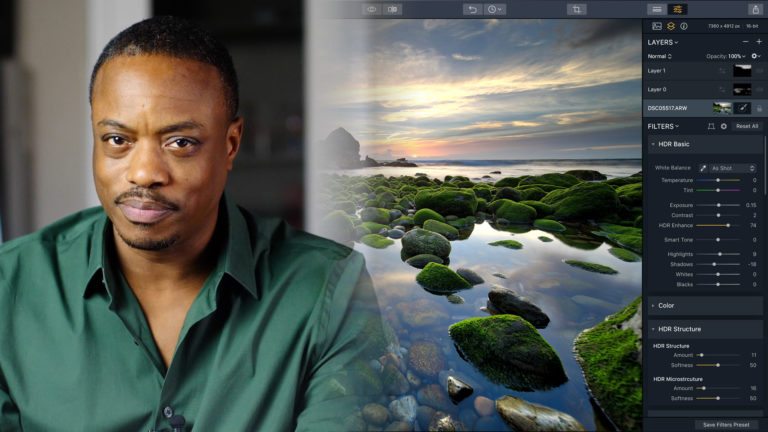
After its introduction in 2015, Aurora HDR quickly became the world’s ultimate HDR imaging software. And now, Macphun has re-written Aurora from scratch, with new smarter tone-mapping algorithms that produce better and more realistic-looking HDR images – as well as improved image processing to produce cleaner, and more satisfying images.

Canon’s financial forecast is haunted by smartphone creep. Adobe hack actually affects 38 million people. A roundtable discussion about learning photography. Plus Don Komarechka inspires you to kickstart your photographic dreams.

Hey there TWiP listener. We’re always trying to make TWiP better – so please take a few moments to sound off below with your thoughts on what you’d like to see more/less of in future episodes.

In this interview Trey and I catch up about his move to New Zealand, a “meta” discussion about art vs tech, and how to market yourself in the digital age.

This week I’m helping out “behind the scenes” at the first Google+ Photographers Conference in San Francisco, CA. It’s “Day…

So you have already followed some basic advice for getting better landscape photos: Shoot during the golden hour, use f/22,…

Are you baffled by the inverse-square law? Wondering what it means to you and your photography? In this article, TWiP contributor Alex Singh explains the meaning of the inverse square law and how it applies to lighting and photography.

TWiP Contributor Dave Reynolds recently completed an outdoor photo shoot for a project he is working on and he shares the top five lessons he learned from his experience photographing models outdoors in New York City.
Bridal shows are a great place for wedding photographers to attract and find clients. TWiP contributor Patrick Reed recently participated in his first bridal show and shares his 5 takeaways from his experiences in preparing for and participating in his first bridal show.
During this talk, you’ll discover how to be the trendsetting studio in your market and build your success through reputation. Delve into the psychology behind sales and learn why clients buy.
Photographers today have options for creating images that were unthinkable less than a decade ago. While it has always been possible to manipulate in the wet darkroom and to employ in-camera techniques on film , today photographers have a choice. TWiP contributor Michelle Geoga shares an experiment with us.
It’s summer and that means that there will be plenty of fireworks celebrations happening around the world. TWiP contributor Nate Donovan provides us with some tips and advice on how to capture great fireworks photographs this summer.
Most people have gotten comfortable with using Lightroom’s export function to create a second set of images that will be used for uploading to the many web photo services. A lesser used function of Lightroom is its Publish Services feature.
The basic function of a Layer Mask is simple. It’s the ability to reveal and conceal pixels between layers. Like wearing a Halloween mask, the face is covered, but the eyes show through. Think of the face as the bottom layer, and the Halloween mask as the top layer…
Most photographers struggle with the timing of their blog posts. They may not blog consistently, they may run out of steam with blogging, or they may forget their blog for a while. In this post you’ll discover several ways to get your posts done. Everything from planning, to scheduling, to broadcasting.
In a typical class I like to make sure everyone understands the basics of selecting, layers, and masking within the first two class meetings. A teaching technique I find useful is to come up with analogies that help students wrap their brains around a basic concept.
In this three-part article, I will dig into Selecting, Layers, and Masking giving simple tips that should be considered in every-day editing. Regardless of how simple or complex my methods are, I always try to approach Photoshop with a focus on loss-less editing and keeping the file size manageable.